

#CharlesKeithCares
empowering GIRLS
CHARLES & KEITH x Save The Children
#CHARLESKEITHcares
CHARLES & KEITH X
SAVE THE CHILDREN
Supporting the future of children and their opportunity to learn
At CHARLES & KEITH Group, we believe in driving meaningful change. Empowerment — championing efforts to advance gender equality and empower the next generation of women.
In partnership with Save the Children, CHARLES & KEITH Group Foundation is supporting two impactful programmes in Nepal: Keep Girls in School and Empowering Girl Child Champions. Since 2024, these initiatives have provided over 1,500 girls with the resources and opportunities they need to stay in school, build confidence, and take steps toward a brighter future.
By investing in education and empowerment, we aim to break down barriers and create an environment where girls can realise their full potential.
IMPACT OVER 3 YEARS
1590
GIRLS SUPPORTED WITH EDUCATION &
EMPOWERMENT OPPORTUNITIES
1660
PARENTS, BOYS & COMMUNITY MEMBERS HAVE
INCREASED SUPPORT FOR GIRLS’ EDUCATION
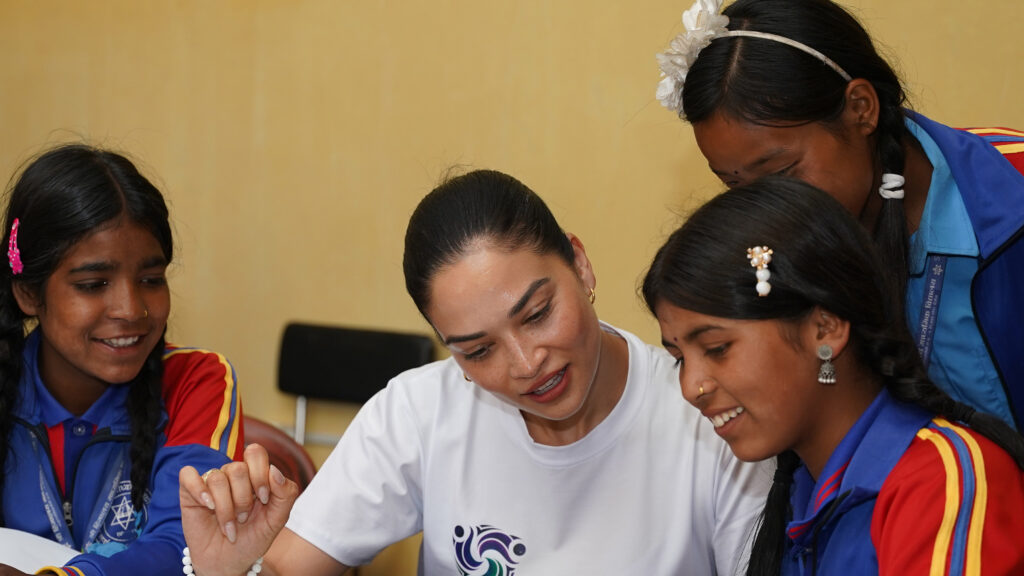
Shanina Shaik Visits Nepal with Save the Children
International model Shanina Shaik recently visited rural Nepal with CHARLES & KEITH Group Foundation and Save the Children, spending time with children and families benefiting from the organisation’s programmes. The trip offered a first-hand look at the resilience and potential of children, particularly girls, when given access to education and opportunities to grow.
During the visit, Shanina engaged with local communities, learning about their challenges and celebrating their achievements. Through classroom visits and conversations, she witnessed how focused support can make a meaningful difference in a child’s life.
Her presence highlighted the importance of listening, learning, and standing in solidarity with children, shining a quiet but powerful light on the impact of Save the Children’s work in Nepal.
MEET THE SUPER 30 GIRLS
“I used to be afraid to speak in front of others. Now, I speak confidently to raise awareness against harmful practices in my community.” – Sharmila
Growing up in a rural village, Sharmila once struggled with fear and low confidence and speaking in public seemed impossible.
Everything changed when Sharmila joined the Himali Child Club, an initiative by Save the Children which focused on strengthening inclusive education governance and empowering children to claim their rights.
With these tools, Sharmila transformed from a shy student into a passionate advocate and went on to join the Super 30 campaign supported by CHARLES & KEITH Group Foundation.
Through the programme, Sharmila received training in radio journalism, child rights and protection, equipping her with the skills to advocate for change. In addition, she receives essential support like provision of schools uniforms, hygiene kits, warm clothes and educational materials, which helps her to stay in school and boosting her confidence.
As a member of the Super 30 campaign, she now leads efforts to end child marriage, challenge the harmful practice of Chaupadi, and promote gender equality. Sharmila and her peers created a community awareness plan and, with seed funding, launched campaigns to educate families about child rights and the importance of education.
Today, Sharmila is a voice of hope. She speaks confidently at community events, on local radio, and among peers—championing a safer, more supportive environment for girls. Her journey shows the power of investing in education and empowerment: one child’s transformation can spark change across an entire community.
“After becoming a girl champion, I realised that I have the power to bring change. I now speak out against child marriage and harmful practices affecting girls.” – Khagisara
Before joining the Educating and Empowering Girls project supported by CHARLES & KEITH Group Foundation, Khagisara had little awareness of girls’ rights or the systemic issues affecting girls like her. In the mountainous region of Dailekh District, Nepal, 14-year-old Khagisara is leading a quiet revolution.
As an eighth grader and active member of the Himalaya Child Club, she is challenging harmful social norms and advocating for the rights of girls in her community.
Through targeted training on child rights, gender equality, and radio journalism, she discovered her voice—and her power to create change. As a girl champion of the Super 30 Leadership camp, she developed a community action plan to combat child marriage and gender-based violence. She amplified her advocacy campaign using seed funding provided to organise peer learning sessions, community dialogues and awareness campaign. Determined to rewrite the future of girls in her community, she engaged youth and families in conversations about ending discrimination and protecting children from violence and neglect.
Her efforts are already making a measurable impact. Community members report a decline in child marriages among adolescent girls, and Khagisara’s leadership is inspiring others to speak out. Her return to the Super 30 Leadership Camp—this time as a mentor—demonstrates her commitment to building a network of empowered girl champions across the region.
Khagisara’s story is a powerful example of how strategic investment in girls’ education and leadership can transform communities. With continued support, champions like Khagisara are not only changing attitudes—they’re shaping a future where every girl can learn, lead, and thrive.
“Women and girls in our community hardly speak out because they are told that ‘good girls’ don’t speak in public. That’s why I was so inspired to see these girls speak so passionately like leaders in our child club.” – Bhagwati
As a member of the local child club, Bhagwati was in awe of her peers speaking like confident leaders, making it seem like anything in the world was possible. In the child club supported by Save the Children, she and her friends debated harmful social norms, such as ‘chaupadi,’ and their negative impacts.
“In our village, people still follow ‘chaupadi,’ where girls are forced to stay in a filthy shed during their periods because they are considered impure. The very thought of girls and women being forced to stay outside the house is traumatic.
However, this culture is slowly subsiding. Yet, the rumors about menstruation are religiously followed, and challenging these norms feels like challenging the whole society.“ Rumors such as the death of cattle and destruction of food crops if touched by a girl or woman during her period have deepened fear in people, leading to stigma and discrimination. “Imagine being told that your cattle will die, or cows will stop giving milk if you touch them during your period. That’s why one shouldn’t drink their milk,” she continues. “This rumor haunted me for long.
But then, we discussed this in our club, and we started critically thinking that if we can fetch water, gather grass for the cattle, and clean their sheds, then why can’t we touch them or drink their milk?“ She started these conversations in the child club and relayed them to her mother, who was too afraid to challenge the existing culture and norms. “One day, during my period, I went to the cowshed, touched the cow, and drank its milk. Then I patiently waited to see what would happen,” shares Bhagwati.
“Weeks passed by, and nothing happened. The cow was happy, healthy, and continued giving milk.” She confronted her mother and told her what she had done. “My mother was shocked, but I told her that from now on, I wasn’t going to follow these stereotypical rituals because they no longer made sense.“ Bhagwati shares that she has slowly started breaking away from harmful traditional practices that impact the dignity of women and girls.
However, she is mindful that social change is a slow process. “I don’t follow these rules anymore, but my mother still practices these norms. It will take time, but I will not stop telling my mother and my friends that these types of harmful cultural practices are not healthy for us girls.” She is one of the ‘Super 30’ girls selected as part of the C&K funded campaign and believes that the campaign will further support her and her peers in their advocacy towards gender equality, and social justice.
“A girl and volleyball? People in my family used to give me blank looks, and some even laughed at the very idea that a girl could be a sportsperson,” – Kamala
Kamala’s passion for volleyball began at a young age. She dreamed of being a sportsperson but faced challenges due to societal norms that discourage girls from participating in sports. Cultural restrictions in her remote village of Jajarkot, Nepal, dictated strict roles for girls and boys, with girls expected to do household chores, get married, and have children, rather than pursue dreams like sports.
Kamala loves to play volleyball. Growing up, she was fascinated by the game and often wondered what it would be like to have a career as a sportsperson. However, her dreams were frequently challenged by social norms regarding girls in sports.
Hailing from Jajarkot, one of the most remote areas of Nepal, Kamala’s life has been dictated by norms that distinguish sharply between boys and girls. “From the very beginning, I was told that girls do household chores, get married, have kids, and take on supportive roles. Boys, on the other hand, are seen as decision-makers with the freedom to explore, go out, dream, and become anything they want,” Kamala shares.
“But that’s not the life I wanted. Being confined to society’s perception of what it means to be a girl is not what I wanted.” Her love for sports was so profound that she challenged the system and began participating in volleyball matches. “At first, seeing a girl play volleyball was quite a sight for people, and it was a shock for them to see how I dressed. I like to dress in comfortable clothes, like jeans and pants, and don’t conform to gendered expectations,” she explains. “So, imagine being a girl, playing sports, dressing differently, and challenging what people think of me,” she smiles. “But then, I am not someone who likes to keep quiet. I like to shake up the status quo.“
Now 16 years old, Kamala is an active member of the ward-level child club supported by Save the Children, and is a vocal advocate for child rights, demanding gender equality and children’s engagement in all levels of decision-making. Kamala is one of the ‘Super 30’ girls selected as part of the C&K funded campaign on girls’ empowerment and access to quality education.
Kamala recently took part in a provincial-level volleyball contest and won. “I was on cloud nine when we clinched the trophy. It felt like being one step closer to my dreams. Hearing people congratulate me made me realize that my dream of being a sportsperson and representing Nepal on the world stage is possible,” she shares with a smile.
MEET SHARMILA
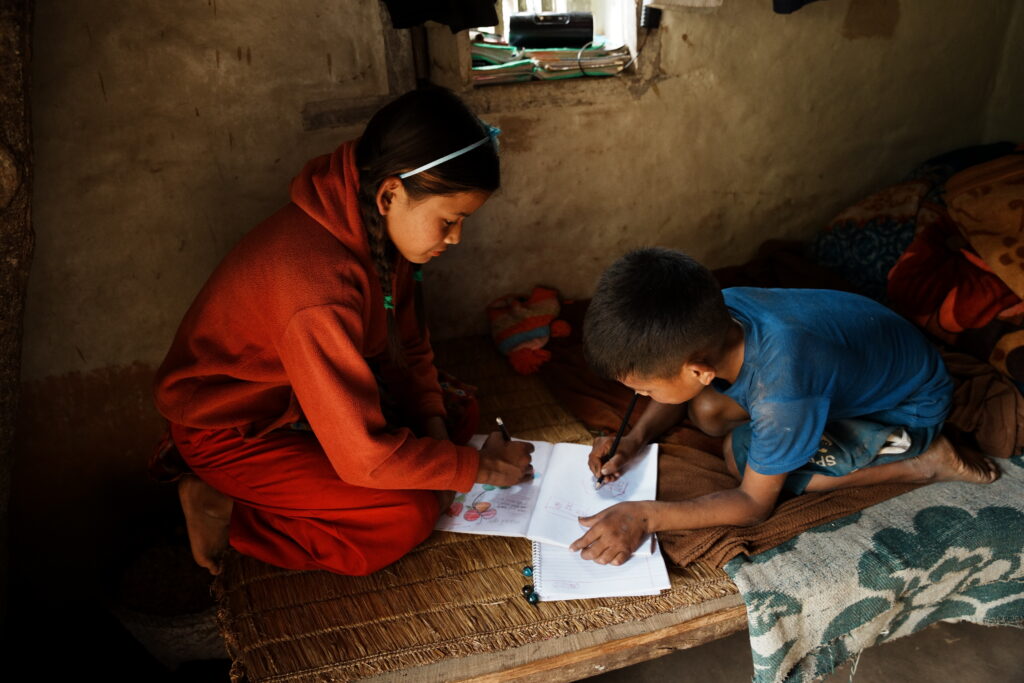
Growing up in a rural village, Sharmila once struggled with fear and low confidence and speaking in public seemed impossible. “I used to be afraid to speak in front of others. Now, I speak confidently to raise awareness against harmful practices in my community.”
Everything changed when Sharmila joined the Himali Child Club, an initiative by Save the Children which focused on strengthening inclusive education governance and empowering children to claim their rights. With these tools, Sharmila transformed from a shy student into a passionate advocate and went on to join the Super 30 campaign supported by CHARLES & KEITH Group Foundation.
Through the programme, Sharmila received training in radio journalism, child rights and protection, equipping her with the skills to advocate for change. In addition, she receives essential support like provision of schools uniforms, hygiene kits, warm clothes and educational materials, which helps her to stay in school and boosting her confidence.
As a member of the Super 30 campaign, she now leads efforts to end child marriage, challenge the harmful practice of Chaupadi, and promote gender equality. Sharmila and her peers created a community awareness plan and, with seed funding, launched campaigns to educate families about child rights and the importance of education.
Today, Sharmila is a voice of hope. She speaks confidently at community events, on local radio, and among peers—championing a safer, more supportive environment for girls. Her journey shows the power of investing in education and empowerment: one child’s transformation can spark change across an entire community.

MEET KHAGISARA
Before joining the Educating and Empowering Girls project supported by CHARLES & KEITH Group Foundation, Khagisara had little awareness of girls’ rights or the systemic issues affecting girls like her. “After becoming a girl champion, I realised that I have the power to bring change. I now speak out against child marriage and harmful practices affecting girls.”
In the mountainous region of Dailekh District, Nepal, 14-year-old Khagisara is leading a quiet revolution. As an eighth grader and active member of the Himalaya Child Club, she is challenging harmful social norms and advocating for the rights of girls in her community.
Through targeted training on child rights, gender equality, and radio journalism, she discovered her voice—and her power to create change. As a girl champion of the Super 30 Leadership camp, she developed a community action plan to combat child marriage and gender-based violence. She amplified her advocacy campaign using seed funding provided to organise peer learning sessions, community dialogues and awareness campaign. Determined to rewrite the future of girls in her community, she engaged youth and families in conversations about ending discrimination and protecting children from violence and neglect.
Her efforts are already making a measurable impact. Community members report a decline in child marriages among adolescent girls, and Khagisara’s leadership is inspiring others to speak out. Her return to the Super 30 Leadership Camp—this time as a mentor—demonstrates her commitment to building a network of empowered girl champions across the region.
Khagisara’s story is a powerful example of how strategic investment in girls’ education and leadership can transform communities. With continued support, champions like Khagisara are not only changing attitudes—they’re shaping a future where every girl can learn, lead, and thrive.
MEET BHAGWATI
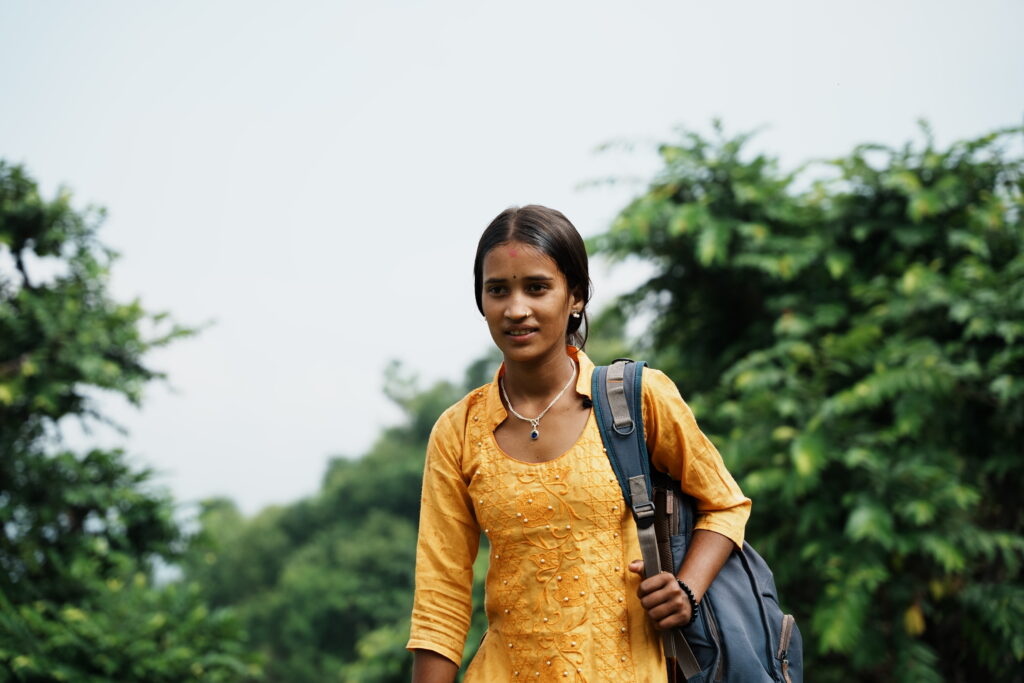
As a member of the local child club, Bhagwati was in awe of her peers speaking like confident leaders, making it seem like anything in the world was possible. “Women and girls in our community hardly speak out because they are told that ‘good girls’ don’t speak in public. That’s why I was so inspired to see these girls speak so passionately like leaders in our child club.“
In the child club supported by Save the Children, she and her friends debated harmful social norms, such as ‘chaupadi,’ and their negative impacts. “In our village, people still follow ‘chaupadi,’ where girls are forced to stay in a filthy shed during their periods because they are considered impure. The very thought of girls and women being forced to stay outside the house is traumatic.
However, this culture is slowly subsiding. Yet, the rumors about menstruation are religiously followed, and challenging these norms feels like challenging the whole society.“ Rumors such as the death of cattle and destruction of food crops if touched by a girl or woman during her period have deepened fear in people, leading to stigma and discrimination. “Imagine being told that your cattle will die, or cows will stop giving milk if you touch them during your period. That’s why one shouldn’t drink their milk,” she continues. “This rumor haunted me for long.
But then, we discussed this in our club, and we started critically thinking that if we can fetch water, gather grass for the cattle, and clean their sheds, then why can’t we touch them or drink their milk?“ She started these conversations in the child club and relayed them to her mother, who was too afraid to challenge the existing culture and norms. “One day, during my period, I went to the cowshed, touched the cow, and drank its milk. Then I patiently waited to see what would happen,” shares Bhagwati.
“Weeks passed by, and nothing happened. The cow was happy, healthy, and continued giving milk.” She confronted her mother and told her what she had done. “My mother was shocked, but I told her that from now on, I wasn’t going to follow these stereotypical rituals because they no longer made sense.“ Bhagwati shares that she has slowly started breaking away from harmful traditional practices that impact the dignity of women and girls.
However, she is mindful that social change is a slow process. “I don’t follow these rules anymore, but my mother still practices these norms. It will take time, but I will not stop telling my mother and my friends that these types of harmful cultural practices are not healthy for us girls.” She is one of the ‘Super 30’ girls selected as part of the C&K funded campaign and believes that the campaign will further support her and her peers in their advocacy towards gender equality, and social justice.
MEET KAMALA
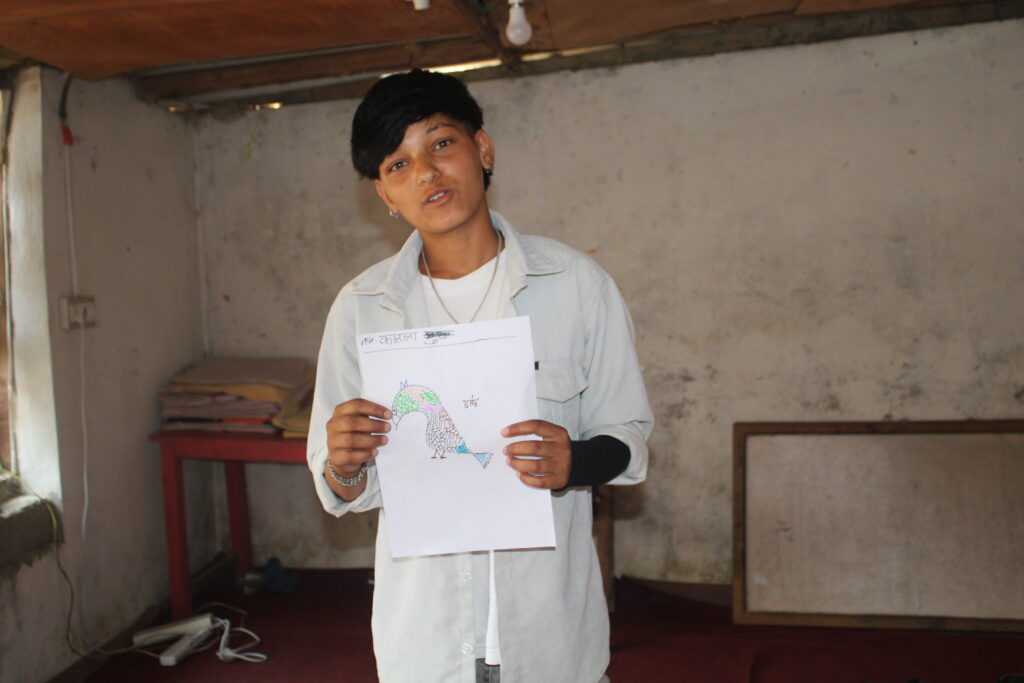
Kamala’s passion for volleyball began at a young age. She dreamed of being a sportsperson but faced challenges due to societal norms that discourage girls from participating in sports. Cultural restrictions in her remote village of Jajarkot, Nepal, dictated strict roles for girls and boys, with girls expected to do household chores, get married, and have children, rather than pursue dreams like sports.
Kamala loves to play volleyball. Growing up, she was fascinated by the game and often wondered what it would be like to have a career as a sportsperson. However, her dreams were frequently challenged by social norms regarding girls in sports. “A girl and volleyball? People in my family used to give me blank looks, and some even laughed at the very idea that a girl could be a sportsperson,” Kamala recalls.
Hailing from Jajarkot, one of the most remote areas of Nepal, Kamala’s life has been dictated by norms that distinguish sharply between boys and girls. “From the very beginning, I was told that girls do household chores, get married, have kids, and take on supportive roles. Boys, on the other hand, are seen as decision-makers with the freedom to explore, go out, dream, and become anything they want,” Kamala shares.
“But that’s not the life I wanted. Being confined to society’s perception of what it means to be a girl is not what I wanted.” Her love for sports was so profound that she challenged the system and began participating in volleyball matches. “At first, seeing a girl play volleyball was quite a sight for people, and it was a shock for them to see how I dressed. I like to dress in comfortable clothes, like jeans and pants, and don’t conform to gendered expectations,” she explains. “So, imagine being a girl, playing sports, dressing differently, and challenging what people think of me,” she smiles. “But then, I am not someone who likes to keep quiet. I like to shake up the status quo.“
Now 16 years old, Kamala is an active member of the ward-level child club supported by Save the Children, and is a vocal advocate for child rights, demanding gender equality and children’s engagement in all levels of decision-making. Kamala is one of the ‘Super 30’ girls selected as part of the C&K funded campaign on girls’ empowerment and access to quality education.
Kamala recently took part in a provincial-level volleyball contest and won. “I was on cloud nine when we clinched the trophy. It felt like being one step closer to my dreams. Hearing people congratulate me made me realize that my dream of being a sportsperson and representing Nepal on the world stage is possible,” she shares with a smile.
WATCH OUR IMPACT STORIES HERE
SUPER 30 LEADERSHIP CAMP
SUPER 30 LEADERSHIP CAMP
30 girls from Karnali as part of the Super 30 campaign, funded by THE CKG FOUNDATION had a leadership camp, to champion quality education and challenge adverse social norms. In addition to leadership training, the 36 Child Champions, like Kamala, received mentorship, resources, and seed grants to launch community campaigns.
These tools will enable them to design localised advocacy initiatives, spotlighting the social norms that curtail the voice and agency of children in Kalikot. This effort empowers the girls to lead meaningful change in their communities and have the futures they deserve.
ABOUT THE CHARLES & KEITH GROUP FOUNDATION

Every commitment made by the CHARLES & KEITH Group Foundation is guided by this single, unifying belief: that we exist to make meaningful impact in society by playing an active role creating a more inclusive and kinder world for everyone.
Collaboration with our partners, the CKG Foundation designs long term programmes to effect qualitative change, be it through empowering women with equal opportunities, increasing eco-consciousness within our communities, nurturing creative and entrepreneurial talents and supporting the education journey all of those in need.
ABOUT OUR PARTNER

Save the Children believes every child deserves a future. Since their founding over 100 years ago, they have changed the lives of over 1 billion children. Around the world, they give children a healthy start in life, the opportunity to learn and protection from harm. They do whatever it takes for children – every day and in times of crisis – transforming their lives and the future we share.
To learn more about the programme and make direct contributions for greater impact